 Walk into almost any workplace today, and you will notice a common, quiet frustration among leaders: teams losing steam, doing only enough to get by, and working in reactive survival mode. The resulting toll is staggering—wasted hours, missed targets, depleted morale, and substantial lost revenue.
When productivity dips, traditional management playbooks instinctively target the downstream symptoms: increasing monitoring, demanding faster turnaround, or penalizing sub-par performance. Yet performance issues are rarely born at the desk where the work is turned in. They originate upstream—in organizational friction, unaddressed stress, psychological hazards, and unseen individual challenges.
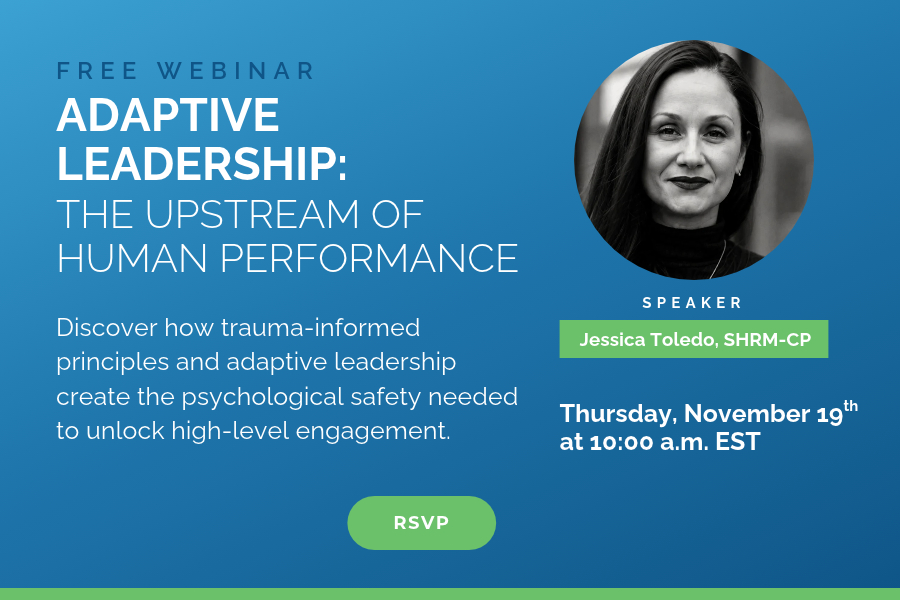
To help leaders across all industries navigate this dynamic, Insight Training Solutions and A.L.M.A.™ HRM are hosting a live, complimentary masterclass: “Adaptive Leadership: The Upstream of Human Performance“ on Thursday, November 19, 2026, at 10:00 AM EST. Led by Jessica Toledo, SHRM-CP—Founder and CEO of A.L.M.A.™ HRM and doctoral researcher in Industrial-Organizational Psychology—this session demonstrates why looking beneath the surface is the ultimate catalyst for operational excellence.
Common Leadership Blind Spots (And Why Modern Teams Disengage)
Before leaders can cultivate sustained motivation, they must recognize where traditional management practices break down:
- Managing the Behavior Instead of the Driver: Writing employees off as “difficult” or “disengaged” ignores the systemic or personal pressures driving their response. Without understanding the root cause, remedial efforts fail.
- Confusing Psychological Safety with Lower Standards: True psychological safety is not about avoiding accountability; it is about creating an environment where employees feel secure enough to admit mistakes, ask tough questions, and take calculated risks without fear of retribution.
- The Pressure-Reactivity Cycle: When leaders panic or react impulsively to deadlines and crises, anxiety cascades across the team, triggering fight-or-flight responses that stifle problem-solving and collaboration.
- Ignoring Cumulative Strain: Everyone carries unseen personal challenges, background stressors, and past organizational traumas. Ignoring these human realities leads to avoidable burnout and costly turnover.
Core Principles of Adaptive & Trauma-Informed Leadership
Rooted in Industrial-Organizational Psychology and practical executive HR experience, adaptive leadership replaces reactive discipline with upstream curiosity, structural clarity, and empathetic accountability.
1. Meet People Where They Are (While Remembering Where They’ve Been)
Every human being brings personal histories, lived experiences, and distinct stressors into the workplace. Rather than expecting flawless robotic conformity, adaptive leaders recognize that great leadership begins with empathy. Acknowledging a team member’s humanity is not a sign of weakness—it is the prerequisite for trust.
2. Trade Judgment for Deep Curiosity
When performance drops or friction occurs, average managers ask: “Why are you doing this?” Adaptive leaders ask: “What is getting in your way, and how can we solve it together?” Shifting from a prosecutorial mindset to an exploratory one disarms defensive posturing and reveals the real workflow or emotional impediments.
3. Foster Relentless Psychological Safety
Innovation and discretionary effort cannot flourish in an atmosphere of fear. By breaking down interpersonal barriers, welcoming diverse viewpoints, and rewarding constructive candor, leaders establish a baseline of security that empowers employees to bring their full cognitive and creative capacity to work.
4. Maintain Adaptive Composure Under Fire
High-performing organizations are defined by how their leaders respond when things go wrong. Staying grounded and composed under pressure models emotional regulation for the entire team, preventing panic-driven errors and keeping critical operations on course.
5. Bridge Well-Being and Business Strategy Through the A.L.M.A. Framework™
Employee wellness and bottom-line productivity are not competing priorities; they are mutually reinforcing components of healthy organizational design. Leveraging structured frameworks enables organizations to adjust systemic workplace conditions so that individuals thrive and the enterprise prospers.
About the Instructor: Jessica Toledo, SHRM-CP
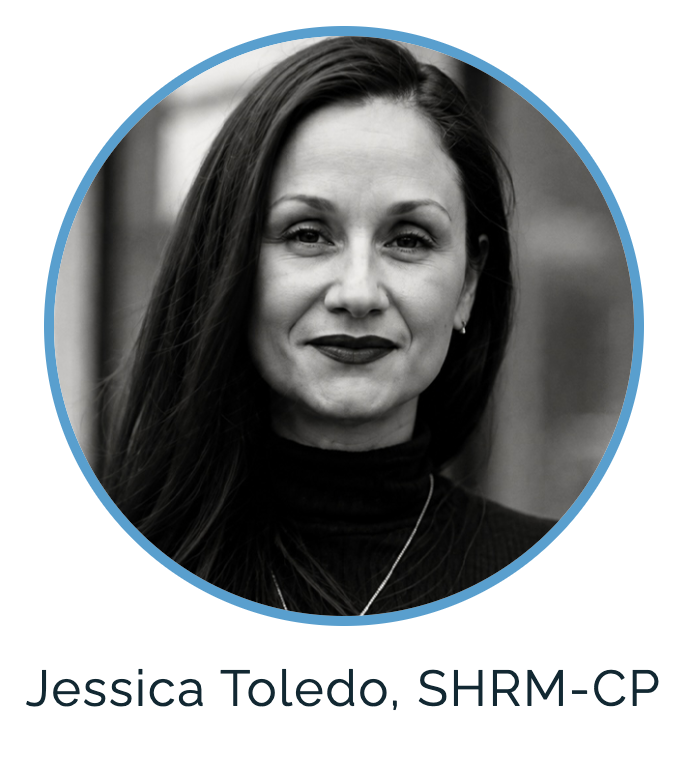 Jessica Toledo is the Founder and CEO of A.L.M.A.™ HRM, a SunnyWorks Innovations company. With nearly 15 years of executive-level Human Resources leadership, Jessica specializes in people strategy, organizational development, total workforce solutions, and high-impact leadership development.
Currently completing her Doctor of Business Administration (DBA) with an emphasis in Industrial-Organizational Psychology, Jessica combines evidence-based behavioral research with frontline executive experience. She holds credentials in SHRM-CP, Diversity & Inclusion in Human Resources Management, Trauma-Informed Supervision, and Psychological Safety & Breaking Barriers.
Through her proprietary A.L.M.A. Framework™, Jessica guides leaders in addressing the foundational systems and workplace conditions that directly impact engagement, retention, and bottom-line growth.
Frequently Asked Questions (FAQ)
Is this training only relevant for Human Resources personnel?
Not at all. While HR professionals gain invaluable insights for policy and culture, this webinar is designed for leaders across all functions—including Executive Leadership, Operations, Supply Chain, Technology, and Project Management. The principles of human behavior and adaptive leadership are universal.
What does “trauma-informed leadership” mean in a corporate context?
It does not mean serving as a therapist or lowering performance benchmarks. Rather, it means recognizing that past experiences, acute stress, and neurological survival mechanisms shape how individuals respond to pressure, change, and hierarchy. A trauma-informed leader structures workflows and communications to minimize unnecessary anxiety and maximize cognitive bandwidth.
How long is the session and what format will it follow?
The webinar will run for exactly 60 minutes: a high-impact 45-minute keynote presentation followed by 15 minutes of live, interactive Q&A where attendees can submit specific management challenges.
What is the registration fee?
The session is 100% complimentary, hosted as a community resource by Insight Training Solutions and A.L.M.A.™ HRM. Advanced registration is required to receive secure streaming credentials.
How to Register
- Date: Thursday, November 19, 2026
- Time: 10:00 – 11:00 AM EST
- Location: Virtual Event (Zoom Access Provided Upon RSVP)
- To Register Online: Click HERE to reserve your spot and receive direct calendar invites and access links.
Stop managing symptoms downstream. Join us on November 19th to master the upstream foundations of human performance.